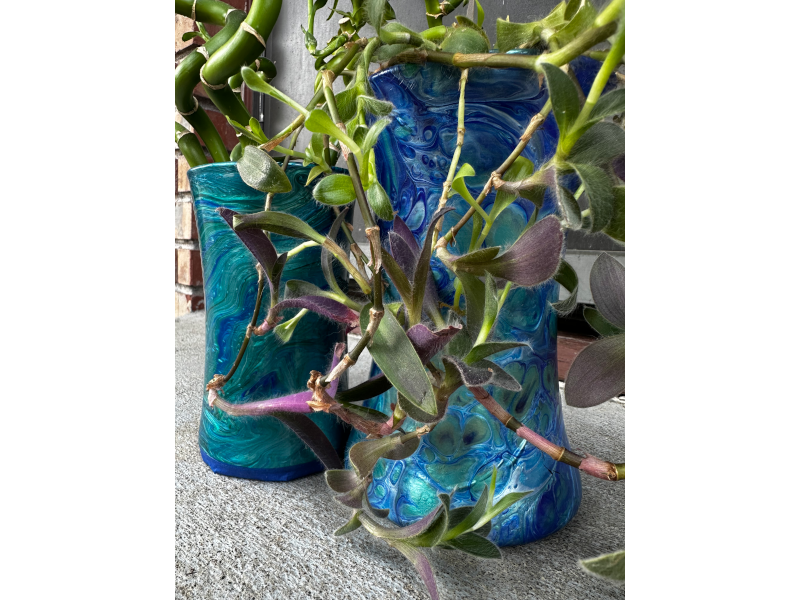
Two glass vessels · Paint skins adhered with Mod Podge, sealed with clear acrylic · Interiors untouched · Still functional
Paint Skins · Glass Vessels
A pour happens once. The skin carries it somewhere else.
Two glass vessels · Paint skins adhered with Mod Podge, sealed with clear acrylic · Interiors untouched · Still functional
What a paint skin is
A paint skin is what happens when you pour acrylic paint onto a flat, non-stick surface (a silicone sheet on a board), let it dry completely, and peel it up. The dried film preserves everything that happened during the pour: the directional flow, the cell structure, the color separations. All of it is locked into the skin when the paint cures.
The skin is then transferred to a new surface. In this case, glass vases: curved, three-dimensional forms that the original pour knew nothing about. The skin wraps the curve, Mod Podge holds the edge, and a coat of clear acrylic seals and deepens the color. The inside of the glass stays pristine. Still functional. Still holds water.
The two vases
The living room vase is the tallest, with a flared top and a slight waist. Originally held cut flowers, now holds water bamboo. The skin came from the runoff paint of a different painting entirely, paint that fell off the edge onto the plastic mat below and pooled exactly where gravity put it. No tilting, no intervention. The original painting is gone. The paint that escaped it isn’t.
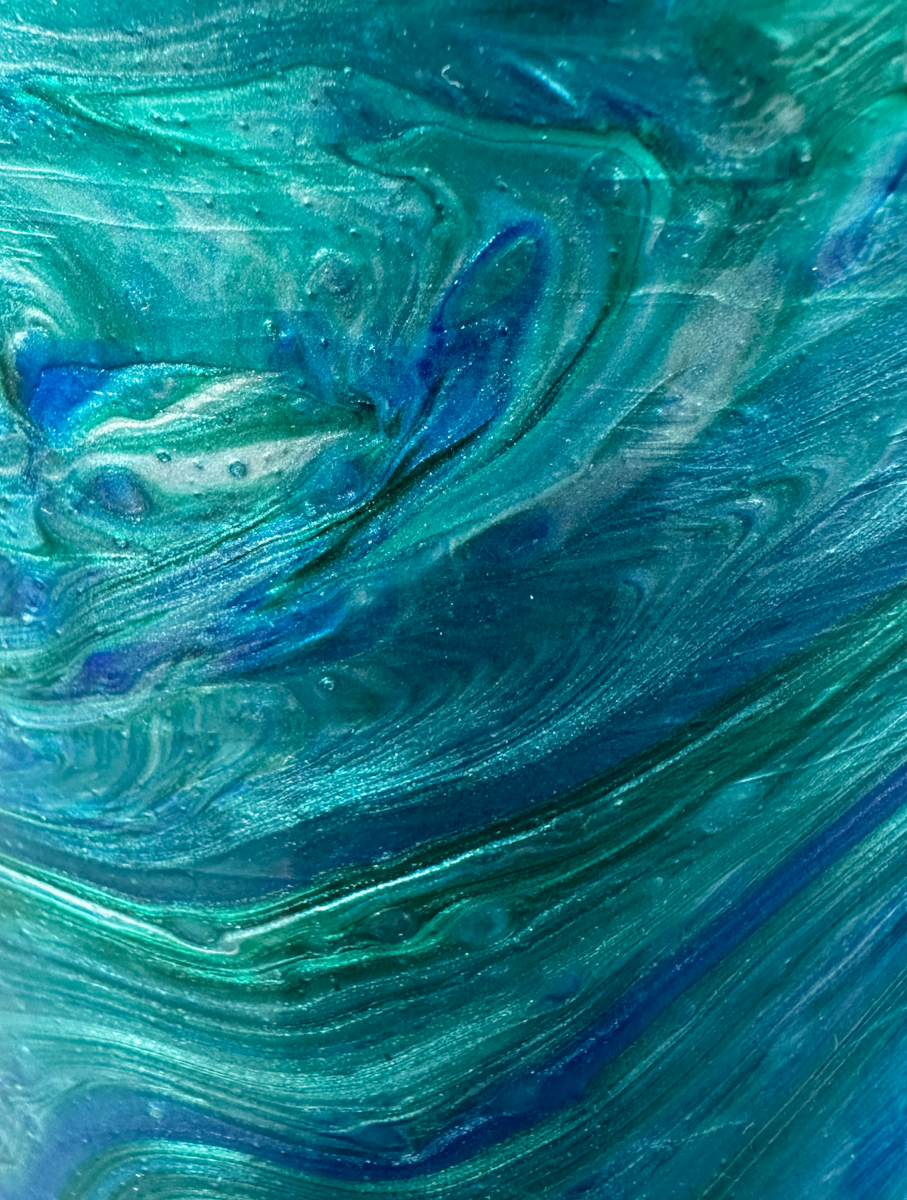
The living room vase surface. No silicone oil, so no cells. Just the directional flow of paint that fell off a canvas and pooled on the mat below. Gravity organized it. No one else did.
The office vase is hourglass-shaped, currently holding rooting wandering jew cuttings. This skin was poured intentionally and thicker. The thicker paint base produced the large, distinct cells visible on the surface: more silicone, more paint weight, more separation between colors. Same color family, completely different surface character.
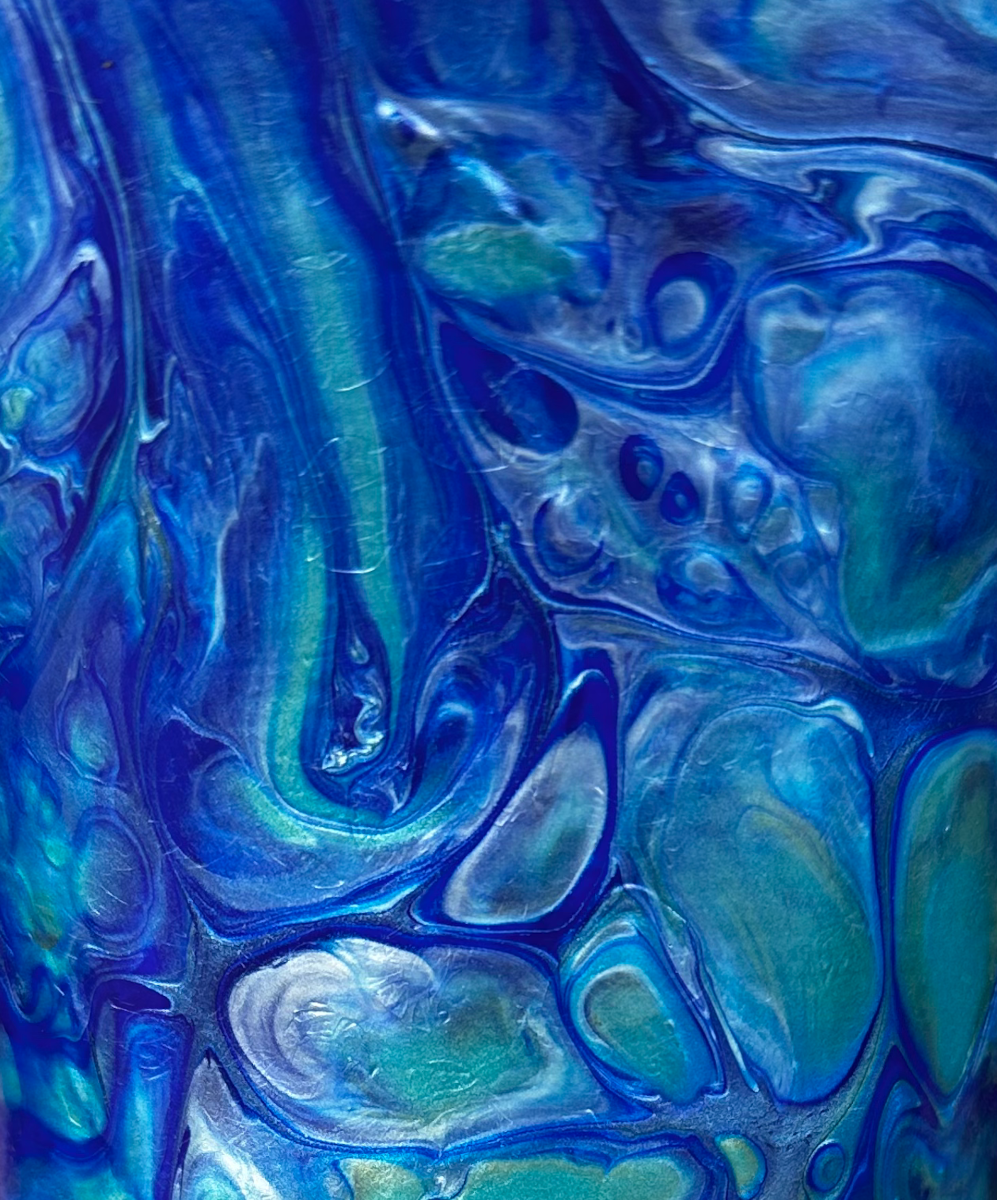
The office vase surface, poured intentionally, with silicone oil and extra paint weight. The silicone resisted the medium, opening these large cobalt and teal-green cells. Where the living room vase flows, this one holds its shape.
The inside
The clear coat seals the exterior. The interior is untouched glass: smooth, waterproof, unchanged. Both vases hold water.
A skin on a vase is a record of a physical event wrapped around something that keeps doing its job.