Found Materials · Lightbox
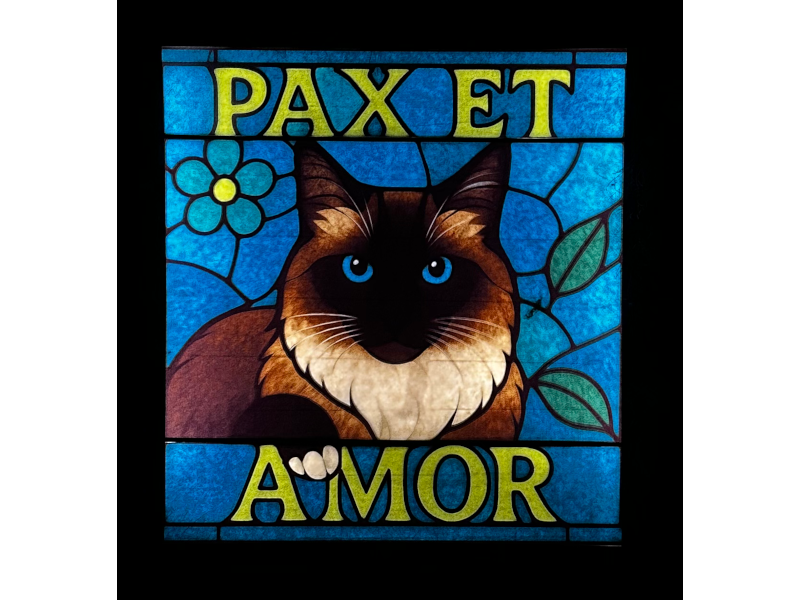
A lightbox that behaves like a stained glass window. Built from packing material and fake fur.
The object
The box is packing foam-board (the dense, rigid kind that comes around appliances), cut and assembled into a box form. The front panels are oiled paper: printed, oiled to make the paper translucent, then fitted to the frame so that when a light source sits inside, the paper transmits the light the way stained glass does. The outside is trimmed in black fake fur.
The image itself was AI-generated. The brief was specific: a ragdoll cat rendered in the style of a church window, full saturation, PAX ET AMOR as the text. PAX is the cat’s name. It’s also the Latin word for peace. ET AMOR is love. The design file came back right and went straight to print.
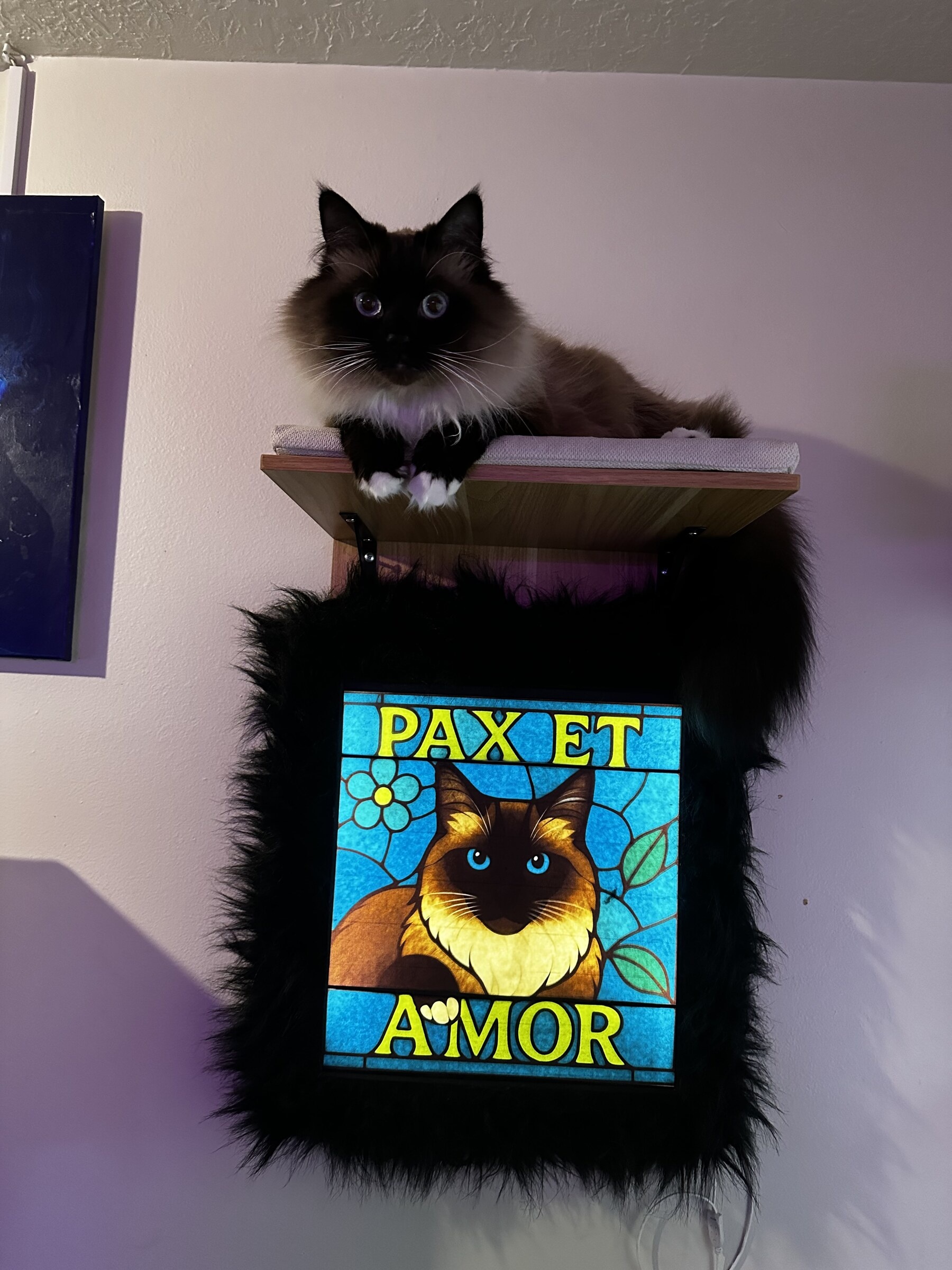
Real Pax, on the shelf above his portrait. The black fake fur trim runs around the full perimeter of the box. He has not indicated whether he approves of the likeness.
Building the box
The box needed to hold the panels and also contain and direct the light. A cardboard hinge at the bottom of the front face lets it open for access without detaching completely. Cardboard flaps at the top velcro closed to keep everything sealed when it’s in use.
Inside, the walls are lined with aluminum foil to reflect and amplify the LED strip that runs along the top. Without the foil, too much light absorbs into the cardboard and the glow is uneven. Foam packing from a delivery box that arrived around the same time fills the gaps around the perimeter where light would otherwise bleed out around the edges of the front panel.
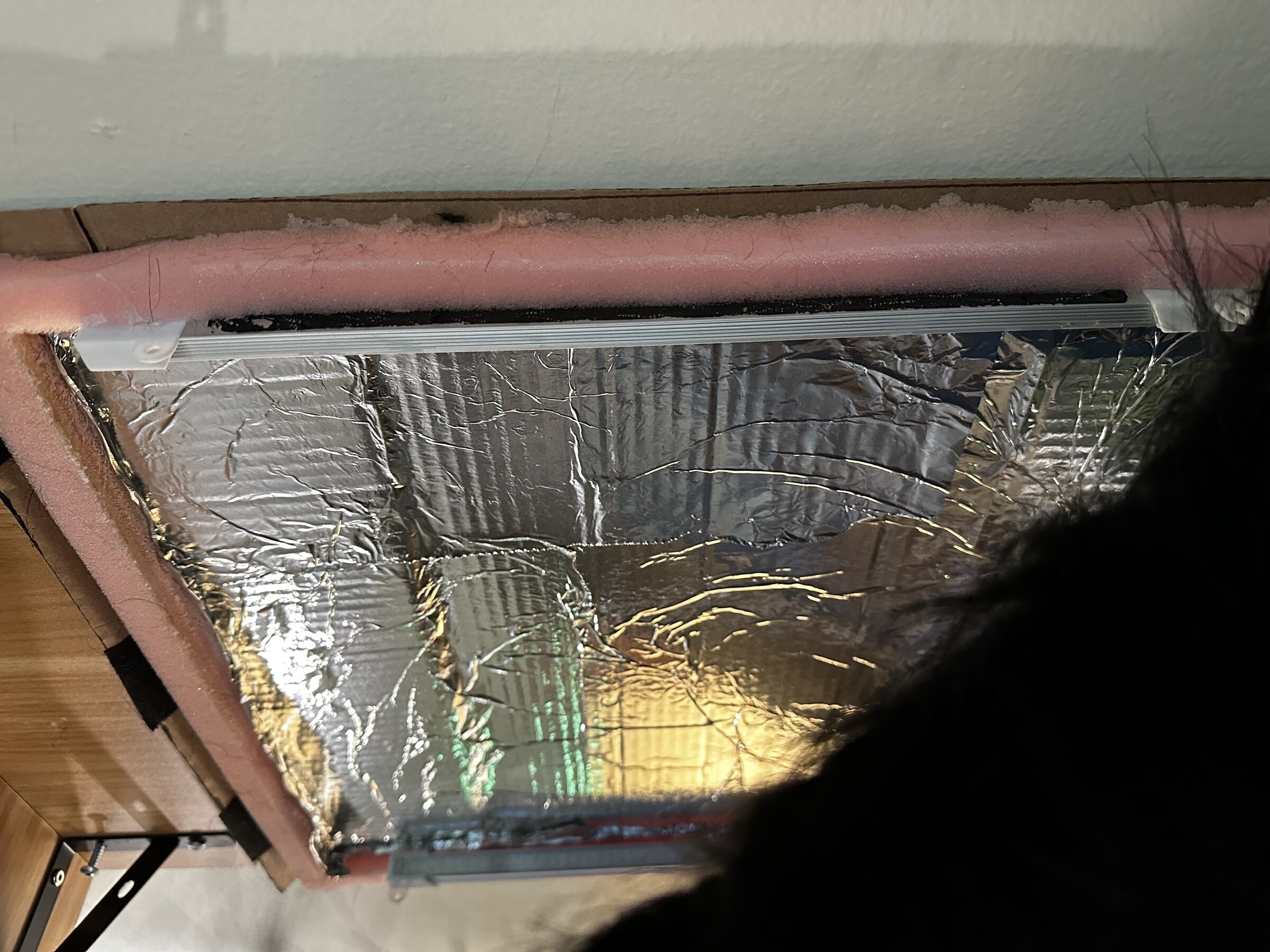
Inside the box, open. Foil covers the walls to reflect and amplify the light. Pink foam packing from a delivery box seals the perimeter. The LED strip runs across the top; a velcro strip at the opening holds the front panel closed.
The print size problem
The image needed to be approximately 15 by 15 inches to fit the box face. The printer maxes out before that. The design was adjusted to add two horizontal bands, slightly darker sections that run across the width of the image, dividing it into three printable sections.
The seam where the sections meet is covered with black electrical tape. The tape is cut to the exact width of the dark “soldering” lines in the stained glass design, so it reads as part of the pattern, not as a repair.
If you know it’s there, you can find it. If you don’t, it looks like the design called for those lines from the beginning. The horizontal bands give the composition a natural place to divide, and the tape disappears into the lead lines that were already supposed to be there.
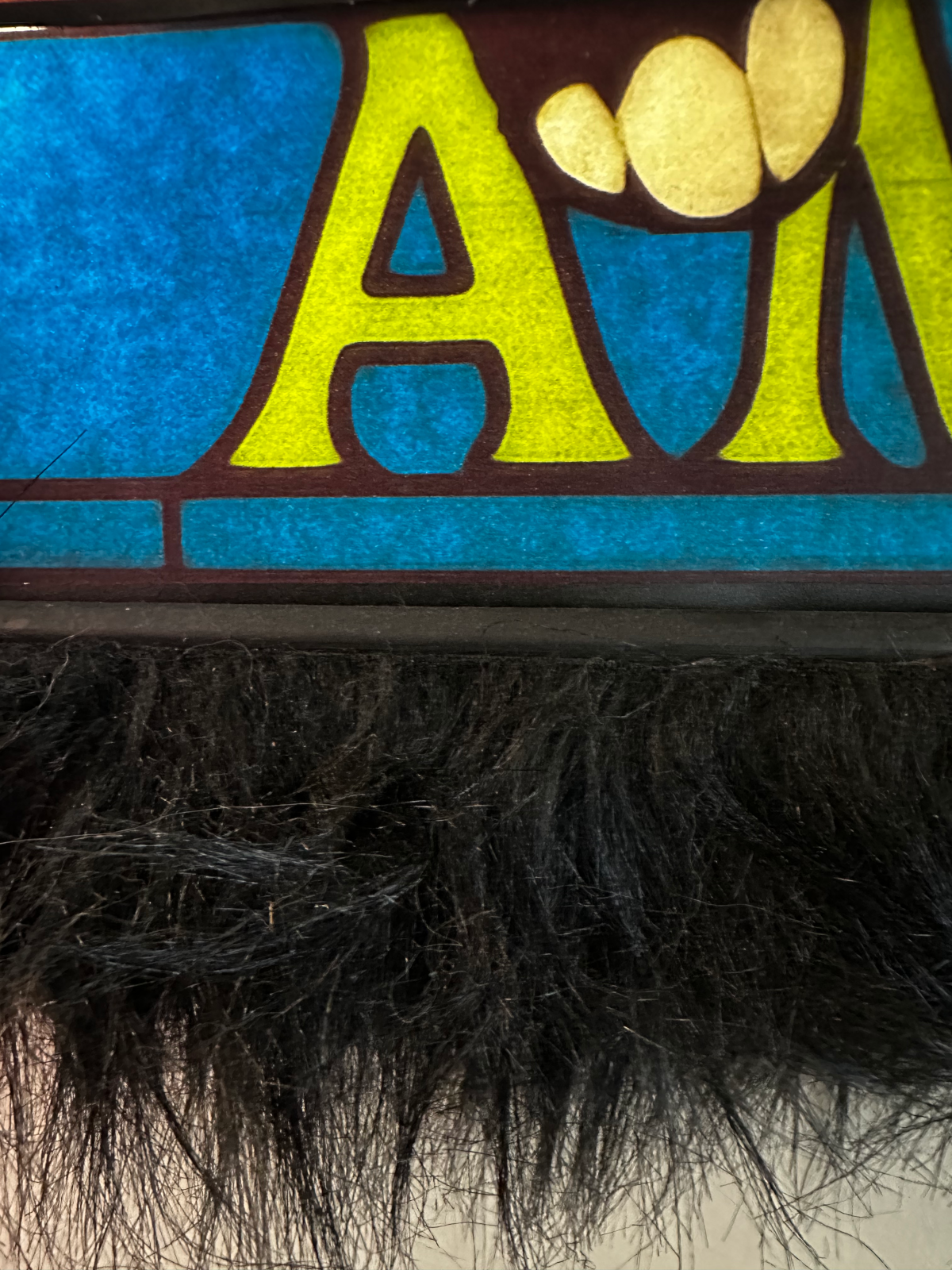
The seam between the upper and lower print sections, covered with black electrical tape matched to the width of the lead lines in the design. Pax provides quality assurance from below.
The light
Inside the box, an LED light strip on a timer. The piece turns on and off on its own schedule, which means it’s occasionally encountered rather than deliberately activated. Walking past it in a dark room and finding it illuminated is a different experience than turning on a lamp. It catches you.
PAX is the cat’s name and also the Latin for peace. ET AMOR is and love. The distinction between the cat and the meaning doesn’t need to be resolved. The piece holds both at the same time.
More making