Structural Cardboard · Paper Mache · Fluid Pour
The first piece in a series about what cardboard furniture can actually be.
The premise
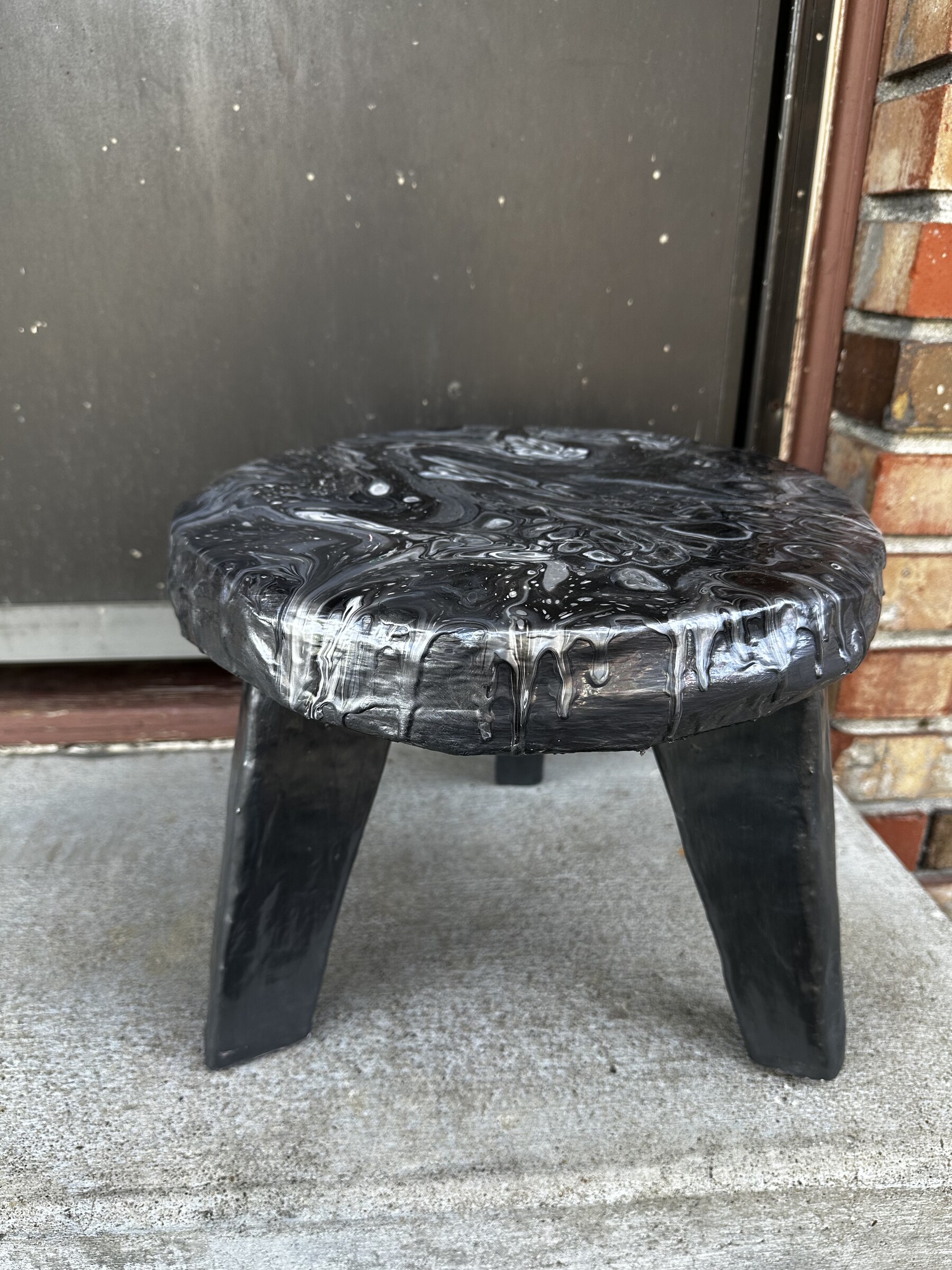
Corrugated cardboard properly oriented and laminated is strong in compression. Strong enough to function as outdoor furniture. The flutes in corrugated board run vertically in this piece. The load goes into the structure, not against it. This plant stand sits outside the front door holding a plant. It has done this through Portland weather. It is still there.
Cardboard is available, cheap, and structurally underestimated. The question is how far the approach scales.
The build
The form is three-legged: a round top on three rectangular legs. Each component is four to five layers of corrugated cardboard, cut to shape and laminated together with wheat paste. Wheat paste is flour and water. It costs almost nothing. It also happens to be what has held together books and papier-mâché objects for centuries.
Paper mache applied over the legs and top, each coat allowed to dry fully before the next. The paper mache fills the cardboard texture, rounds the edges slightly, and creates a unified surface that takes paint the way wood does. Between the raw cardboard and the finished piece is a lot of waiting.
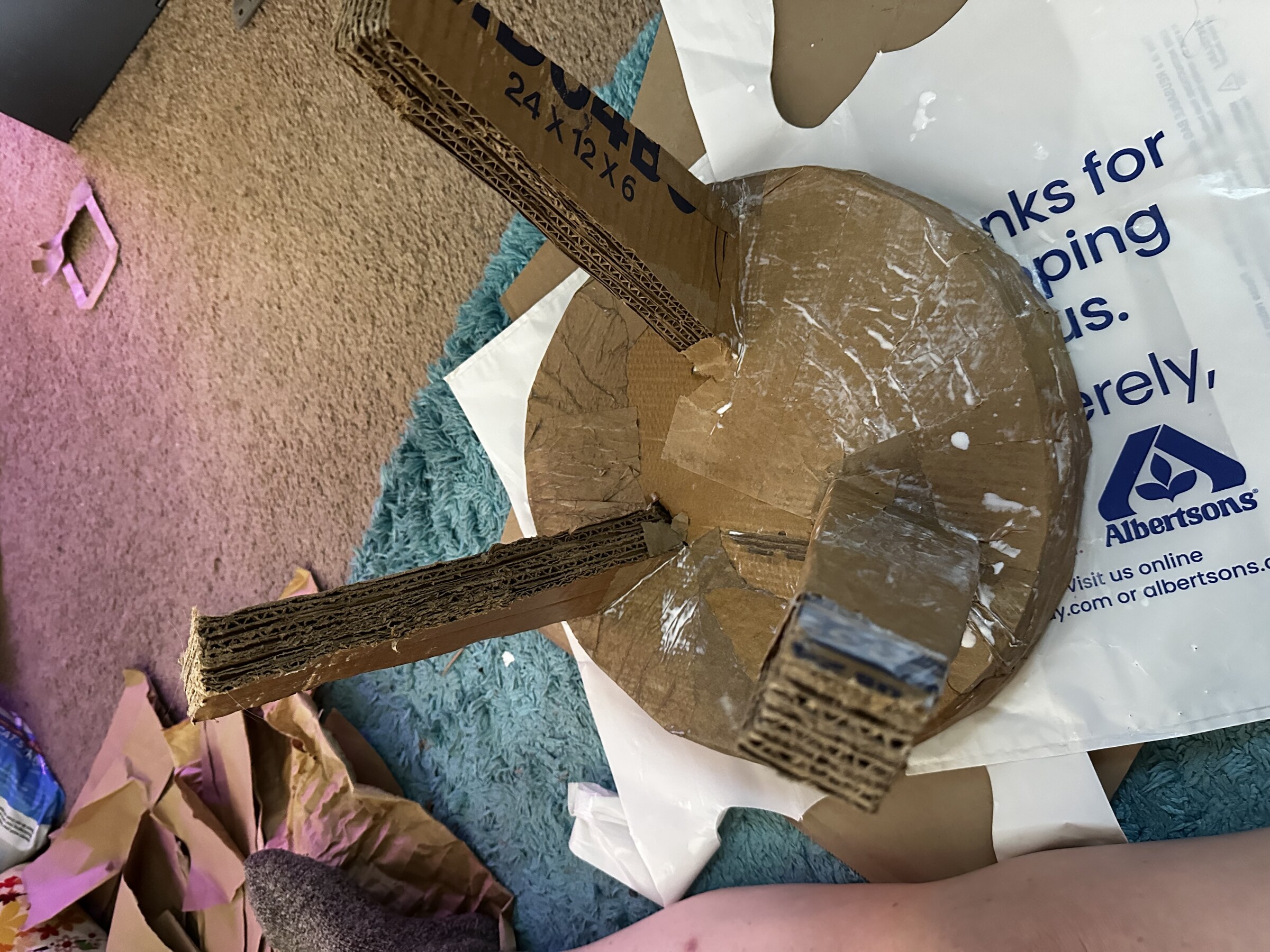
The cardboard skeleton: round top and three legs, each four to five laminated layers. The corrugated edge shows the structure that makes it strong in compression.
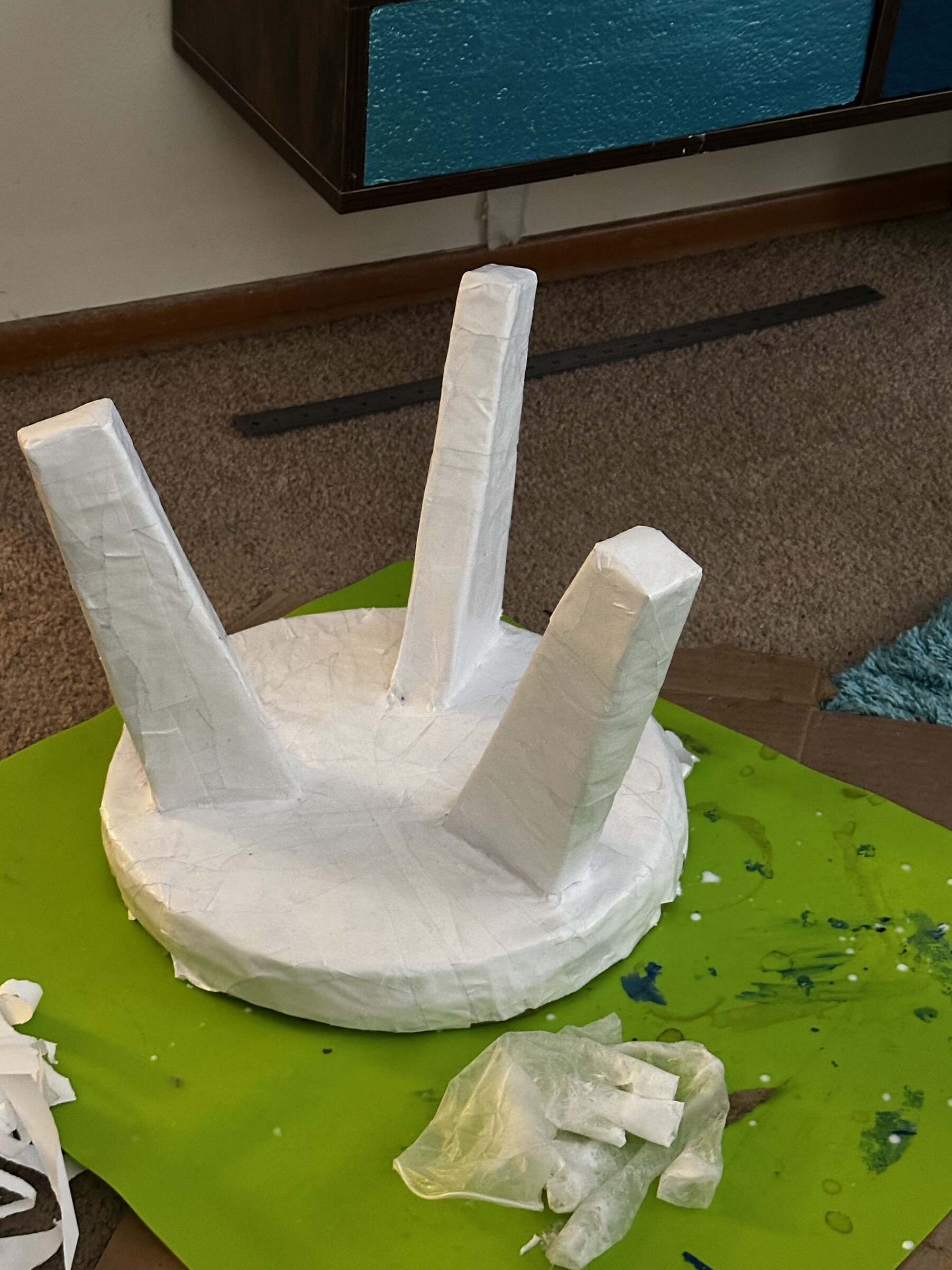
After paper mache, upside down on the painting board while it dries. The white surface has unified the form. The cardboard texture is gone. It looks like something cast from a mold.
The surface
The legs are painted with Azteca silver metallic. The top is a fluid pour, black and white with silver moving through it, poured directly onto the paper mache surface. The pour flowed to the edges and over them; the drips are still there on the underside of the rim. They record the moment correctly and there was no reason to remove them.
The swirling forms, the deep voids, the way the silver catches light from different angles. It reads as volcanic. Or planetary. It looks like something from a distance rather than something made at a table.
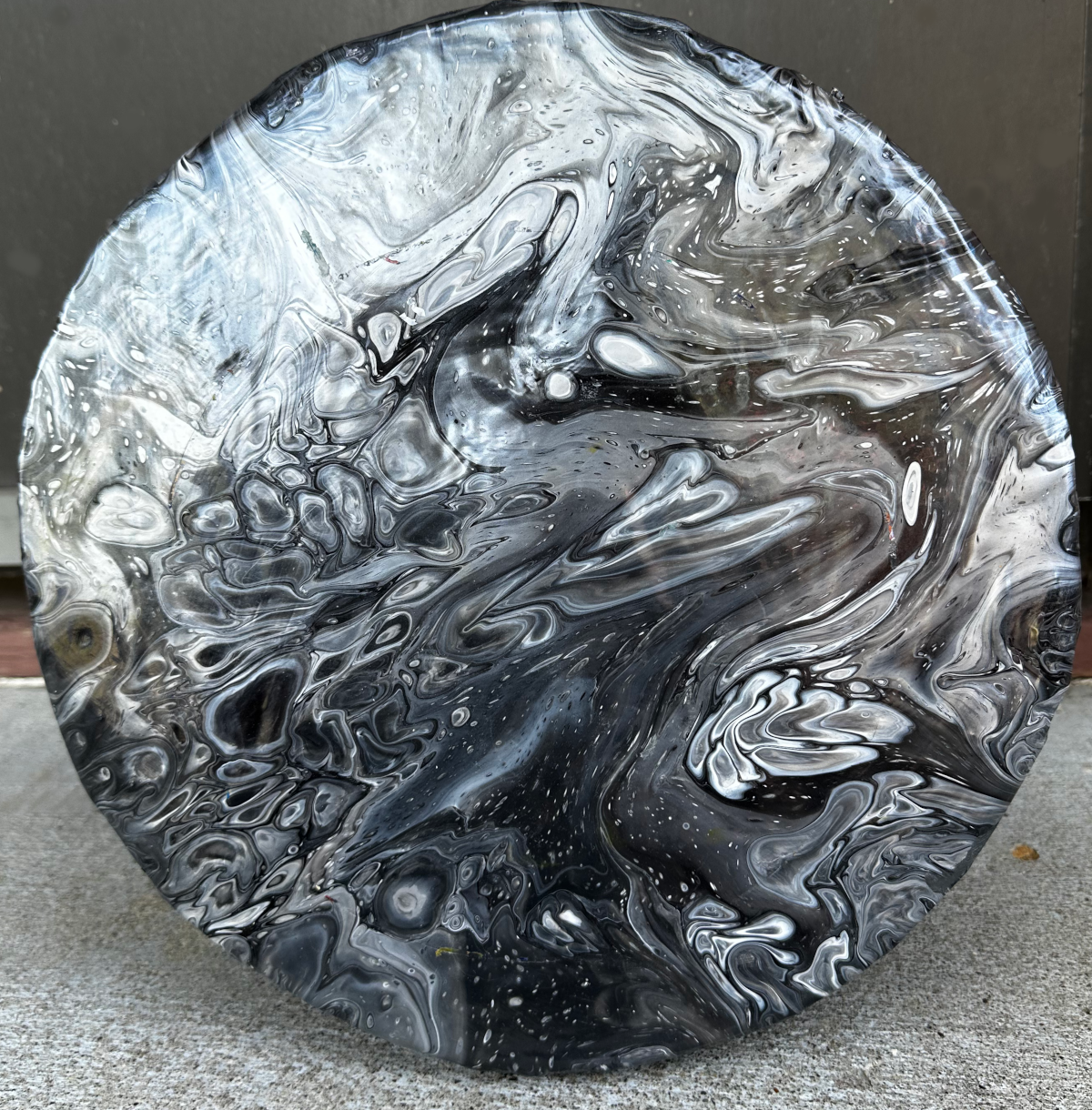
The full top, from directly above. Every form here is what the paint decided to do: the direction it flowed, where it pooled, where heavy pigment pulled through lighter fluid.
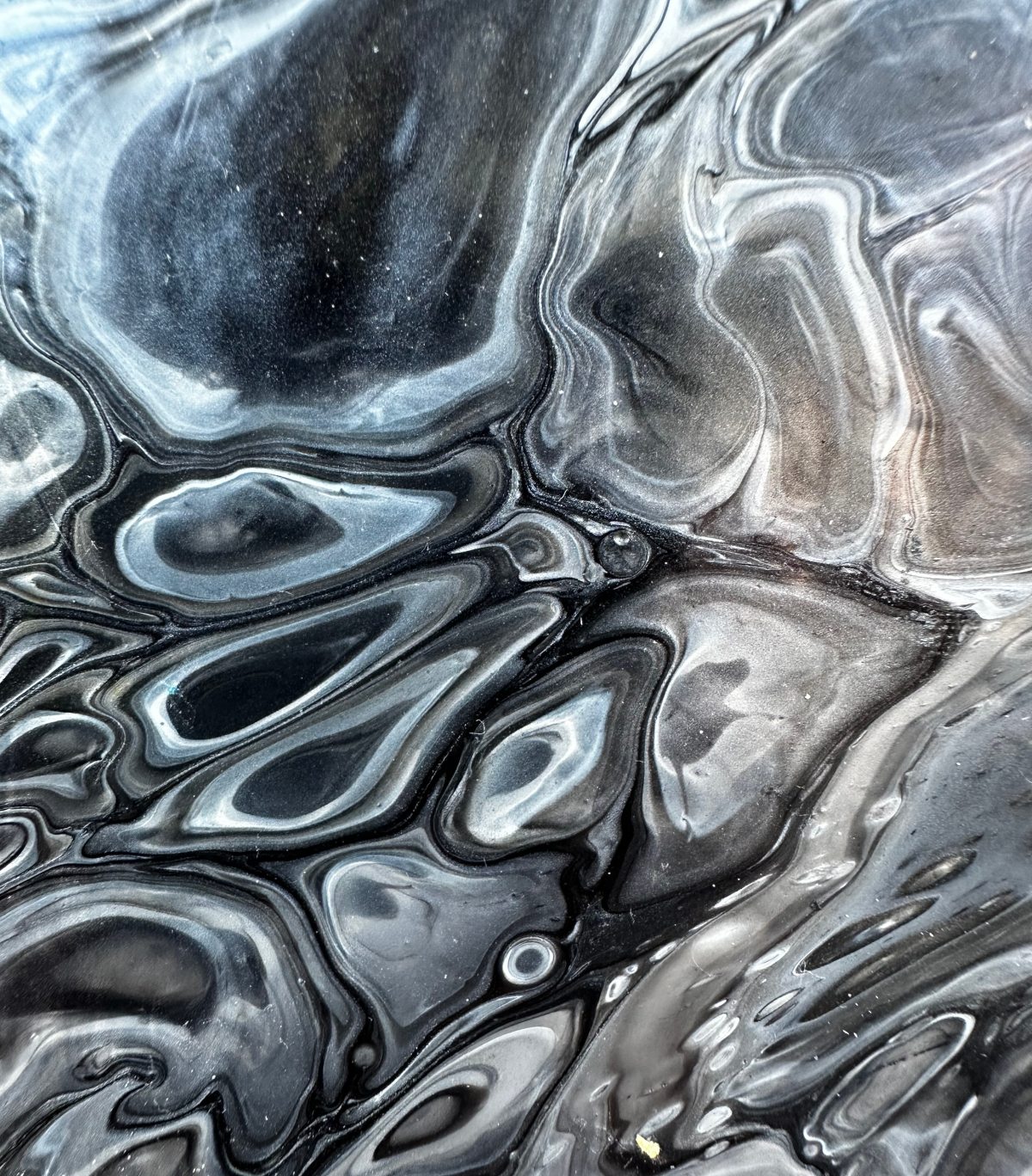
The surface up close. Deep voids that look like impact craters. Silver threading through black in forms that the brush never touched. Only the pour did this.
What this is the beginning of
The plant stand is a proof of concept. It answers the first question: can cardboard and wheat paste produce something structurally sound and weather-resistant enough to use outside? Yes. It can. The series continues with larger forms, more complex geometry, and different surface treatments. The material is cheap. The labor is the constraint, and labor has a way of getting faster with repetition.
More making