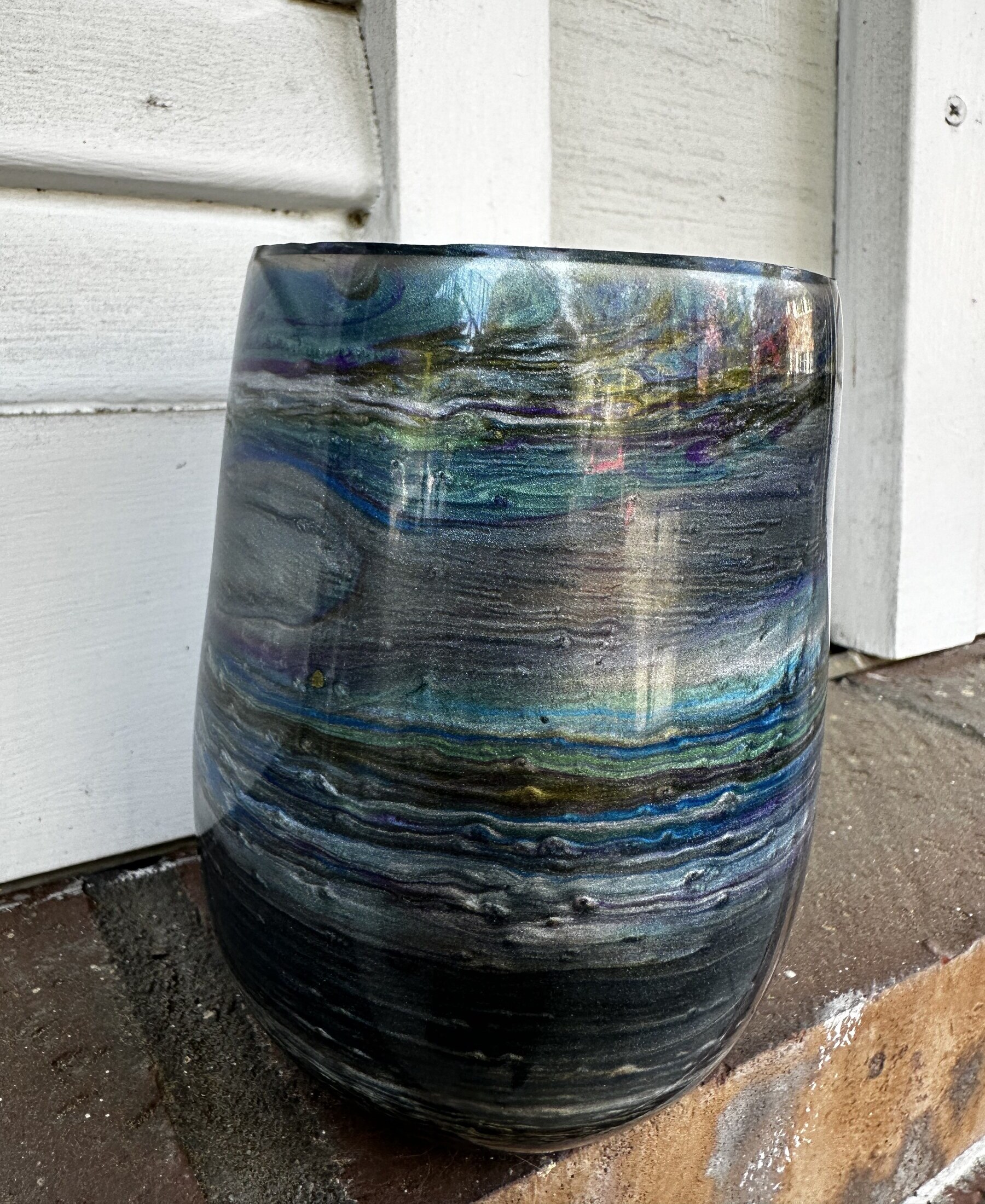
Resin & Mica · Cup Turner
Not gravity. Not air. Centrifugal force.
The object
The cup started as a promotional item from a team building event, a thermal cup with a lid, the kind that sits in a cabinet for years. It didn’t stay in the cabinet. It now lives on the side table in the living room, holding pens and Pax’s grooming brush.
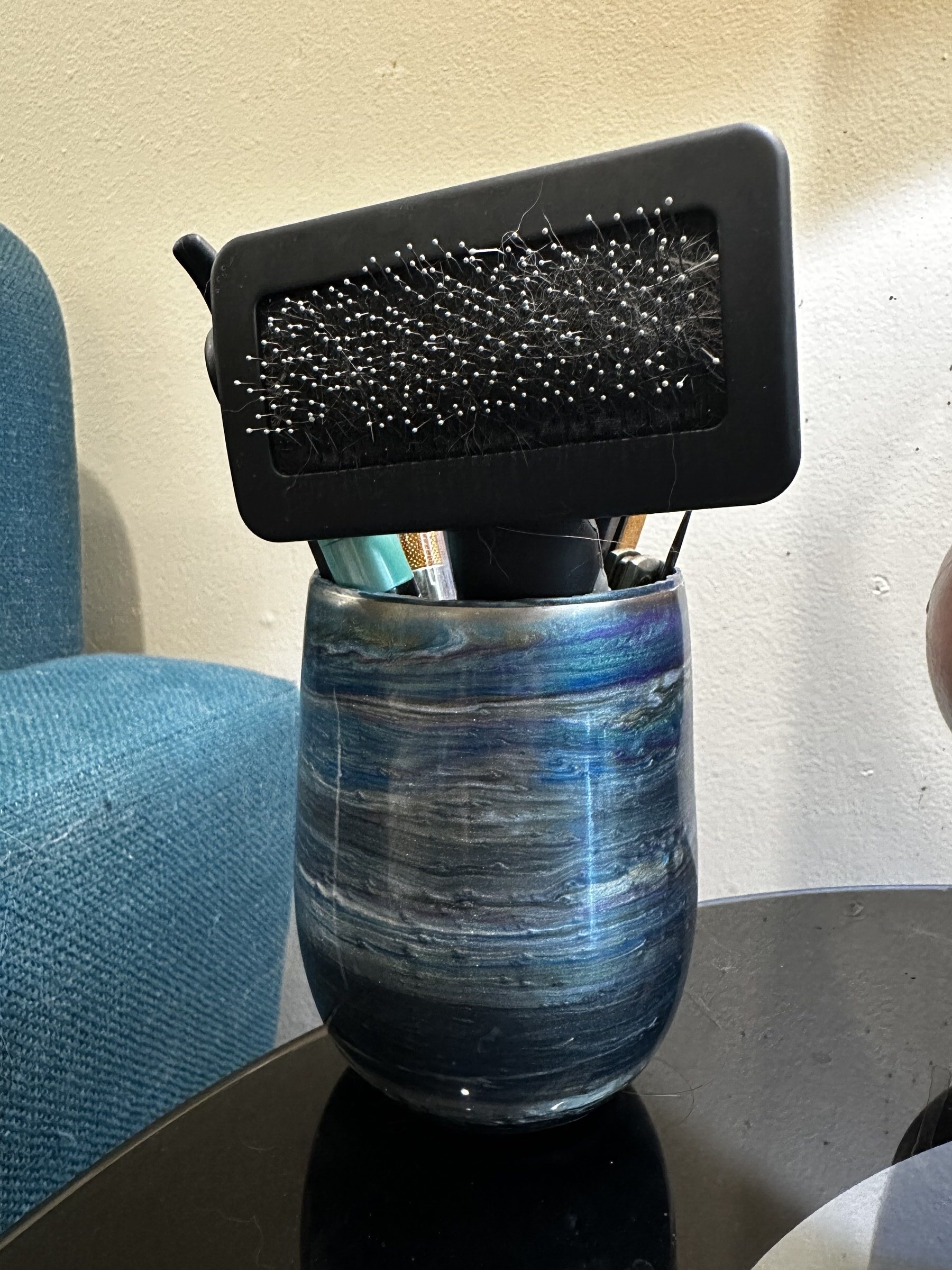
On the side table in the living room. The cup is velcroed to the table. Pax has discovered that nudging the brush handle is an effective way to request a spa treatment.
The technique
Resin and mica powder work differently from acrylic paint. Resin is a two-part liquid that cures hard and glossy. Mica is a mineral pigment that catches and reflects light. It shifts depending on the angle you look at it. A cup turner spins the substrate continuously on a horizontal axis while the resin is applied. Each color settles into its own orbit before the next goes on.
This was the first time working with resin and mica together. The color selection was intentional: silver, purple, blue, teal, olive. A compressed palette that would layer into something that looked both dark and iridescent at the same time.
Different physics
Every other piece in this body of work uses gravity as the primary force. Paint falls, flows, pools, spreads toward the edges of the canvas. Cells form where heavy pigment sinks and lighter fluid rises. Silicone oil creates pockets of surface tension. The whole medium is in conversation with the direction of down.
The cup turner removes gravity from the equation and replaces it with a motor. The surface doesn’t know which way is down. It only knows rotation.
No cells, no directional sweeps, no pooling at the edges. Instead: precise horizontal bands with soft transitions, mica shimmer running consistently around the full circumference. The surface reads as geological, like a cross-section of something that formed over a very long time.
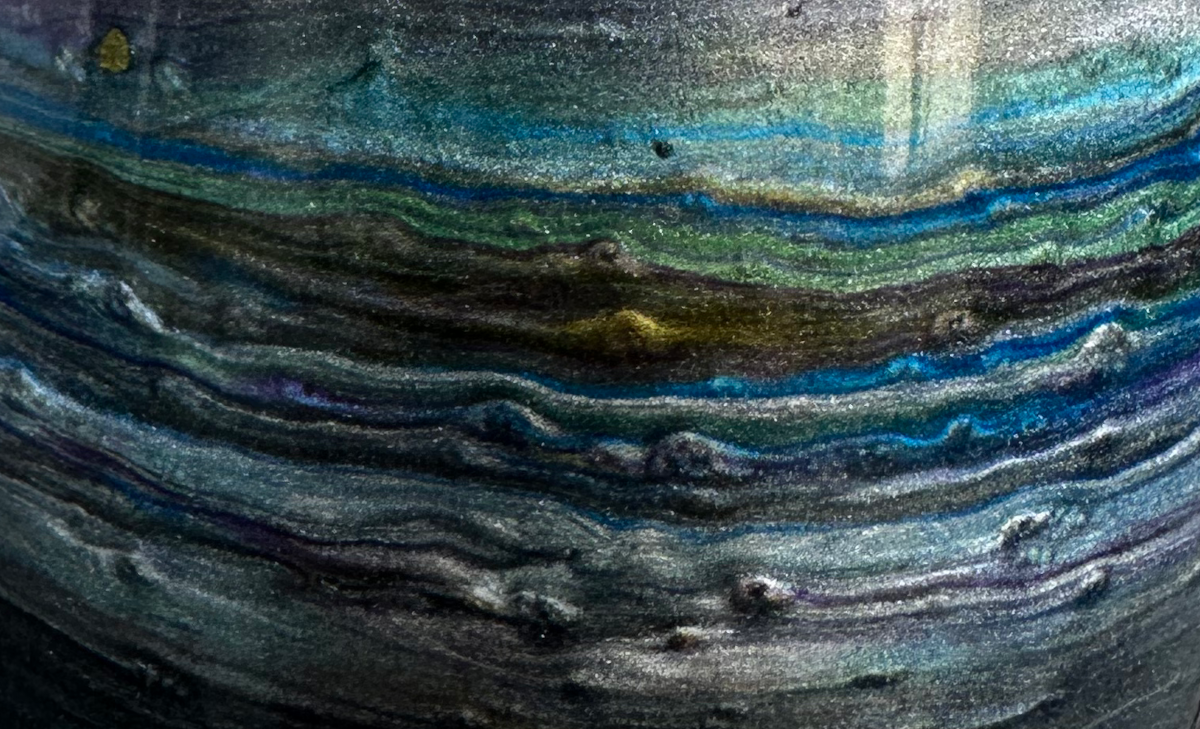
The banding up close: horizontal strata of silver, blue, teal, and olive mica. Rotation laid each layer parallel to the last, with none of the turbulence that gravity introduces.
More making